
Categories
Archives
Search

The key to navigating through contentious times
Our nation has been going through a storm the past three months. First came the Corona Virus, then the civil unrest sparked by the George Floyd tragedy. We are all stirred up, and each day are compelled to choose the right thinking that keeps us moving forward.
Just this week, Suzanne Corr, Executive Director of the Barrington, Illinois Chamber of Commerce, wrote a column billed, “Listen with the heart”. She talked about some things we can do to have conversations that are valuable rather than divisive.
This reminded me of an interview I heard nearly 20 years ago. It was on a morning news program, and former Education Secretary William Bennett was being interviewed. He had just written his book, “Death of Outrage”. It was in reference to then President Clinton and the political scandal that led to his impeachment. It was a book critical of the President. At the same time, Robert Bennett (William’s brother) was the defense attorney for President Clinton. The interviewer pointed this out and said, “I take it you and your brother don’t get along”. William immediately replied, “That’s wrong. My brother and I love each other, are very close, and we spend as much time together as we can. We were both brought up to be our own person. That is who we are. Just because you have different views doesn’t mean you can’t be close”
Both of my boys are in their early 30’s, and they have different political views. They love each other and spend a lot of time together. Caution: I am by no means recommending that you go around getting involved in political discussions. In both the case of the Bennett brothers and my sons, you have to have built a solid base of love and trust. Have a quality conversation with someone you love, trust and respect. Listen to understand. Expect to learn something!
The power of empathy in tough times
Yesterday, following a doctor appointment, I was waiting for the elevator to come to my floor. When the door opened, a man standing a few feet away from me politely asked, “Is there room for two?” I quickly responded, “Yes. Absolutely”, and thanked him for asking. The elevator carried us to our destination, and we then went our separate paths.
Afterwards I was reflecting on the exchange. If I were a merchant, and he was a vendor, I would probably be very comfortable doing business with him. He thought of me and my world, and he valued it. Such unselfish acts go a long way in displaying our character.
During this current Covid-19 Crisis, I am frequently asked by my clients, “How do I manage my customer relationships during this time?” Most folks are very distracted now, and the last thing they want to do is talk to a salesperson. They need support, friends, and people who give them confidence in the future. They need us.
Successful salespeople are good friends. Surveys have consistently shown that those who are most loyal to their suppliers describe their rep most often with these three words: Friend, consultant, and teacher. When we are struggling through tough times, we count on friends, people who will listen, and those who can help us gain a more favorable perspective. That’s you!
If you haven’t already, make a list of all the people who have counted on you to serve them. Give them a call. Get in to their world. Ask “how” and “what” questions. Listen to understand. Show you understand. If you can do this, you will help them out and strengthen the relationship. If they need something, they will ask.
Thoughtfulness can live forever
“My favorite person in the whole world is my grandmother. She always has time for me”
-5-year old on Art Linkletter show
During this virus crisis, many of us have more time to spend at home with our family. This unique situation can provide opportunities to strengthen relationships and make good memories. Most of us can recall a special memory from our childhood that we treasure. For me, the first one that comes to mind is when I was 4. Like most 4-year olds, I lived in a world of 95% creativity, and spent my time observing, trying, falling, and learning.
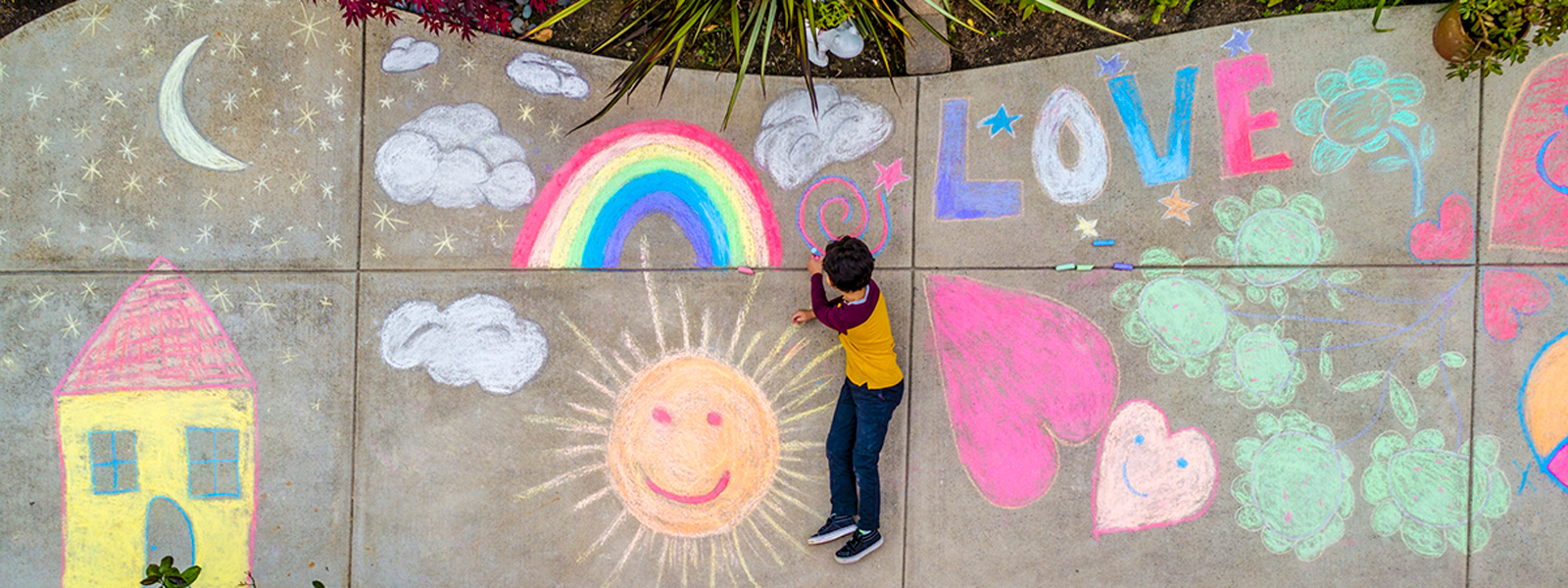
One day I decided to play with a piece of chalk. I had just learned how to draw arrows, and I began doing so on each sidewalk square. It was fun as I was experimenting with my new-found skill. I just kept going with no idea of getting lost or hurt. After doing 20 squares or so, I paused to look at my surroundings. I was lost! I had no idea where I was. Just as I was about to panic, round the corner came my 6’3″ dad, smiling from ear to ear. Dad was there! I asked him how he found me. I should have figured it out. He followed the arrows.
As you might guess, this story is packed with meaning for me. Dad was looking out for me and showed me once again that he was here to help me grow. I realize now that this moment could have gone much differently. Instead of taking the loving and smiling approach, what if he had yelled at me or scolded me for leaving the yard or crossing the street? I am sure we talked about that later, but all I recall is him being there and looking out for me. What special memories can you create with your loved ones in this extra time? There is one to be had every day…even if it is only a tiny one. It may be huge to someone else.
The rewards of thoughtful generosity
“Cast your bread upon the waters…”
To succeed in business, we need to be fair, friendly, and do the job right the first time. At the same time, we can’t afford to “give away the store”. Today I was talking to a HVAC tech who had successfully been in business for over 40 years. He shared a story with me that I will long remember. Here is what happened…
It was the heart of winter, and Roger responded to a service call regarding no heat. He inspected the furnace, and discovered the heat exchanger was in pieces. It was not safe to operate the furnace. It had to be replaced. The owner of the home lived alone. Her husband was in the service serving as an intern. She had no money. Roger said, “Let me work on this and get back to you”. He called his supplier and told them the story. They immediately picked up on it, and agreed to supply the materials if Roger would do the labor. They thought this would be a nice story for their newsletter. It was a deal. The homeowner was eternally grateful. It was one of those feel good moments.
Several months later the husband returned from the service and began his practice. He never forgot the kindness that Roger had shown, and Roger says that he has received more referrals from this person than any other single source over the years. We know the beauty of this: Roger did this expecting nothing in return. For him, it was just the right thing to do. He was thinking of the other person. When we give, it is amazing what comes back to us. This is just another example to illustrate this fundament of business.

Go the extra mile with a “Jaw Dropper”
About 15 years ago I was working for a company with a close-knit staff of about 25. On one bittersweet day, we had a surprise going away party for a departing co-worker who had been part of the team for many years. Tom was loved by his teammates, and we wanted to show our appreciation in a special way.
Tom was an active baseball player and loved the game. We decided to buy him a mitt that was signed by each of us. Because the mitt was a memento and likely would never be used, you would think we would have bought an inexpensive one. No. We bought a Wilson A-2000. This is one of the most common choices of Major League pitchers, and they are predictably expensive. Tom was overwhelmed and became very emotional. Later he shared that his joy went way beyond the signed mitt. It meant a lot that we thought that much of him. What we did is called a “jaw-dropper”, and when we do things like this, they strengthen relationships and are never forgotten.
Due to the Corona Virus crisis, many of us are finding that we have extra time on our hands. Here’s one way we can use this time wisely. Deepen our relationships with a “jaw-dropper”. Here are a couple other examples to get your creativity going:
My birthday was last Tuesday, and two of the cards I received were hand made. Much time and thought had been put in to both cards. In one case, the person had included pictures they had uncovered from my high school and college yearbooks. Most important, each card had a touching personal note saying how much they valued me as a life-long friend. At 71, getting something like that is truly a “jaw-dropper”
Think of a relationship you have that you value highly. Why are they so important? What is something that you could say or do for them that radiates your thoughts with an exclamation point? Go for the “jaw-dropper’!