
Categories
Archives
Search
Category: Sales

The most profitable prospect
If you are in sales, you know the most important thing you need to do: Have as many sales conversations as you can with qualified prospects. So how do we qualify prospects and which prospects should we be seeing the most? Consider these four types of prospects:
- Known need and willing to talk
- Known need but not willing to talk
- Unknown need
- No need but willing to talk!
Prospect #1 sounds ideal, but we need to be careful. They may tend to price shop. Prospect #2 is good. We just need to build trust and get them comfortable talking. Then there is prospect #3: This one is my favorite: An unknown need. Here is an example to illustrate:
Several years ago, I was doing some assistant coaching for soccer, and I was talking to the head coach. In our conversation, we both talked about who we worked for. As it turned out, I discovered Sam was the President of a large manufacturing firm that employed over 500 people. When I talked about what I did, he said, “I’d like to meet with you at my office”. We did. As a result, I did a needs assessment, and when we were complete, we uncovered a serious problem he did not know he had. I had help him discover it! He was concerned, and asked, “Now that we know, how can you help us?” We worked together, and he soon became my biggest customer. When we helped him discover a serious problem he wasn’t aware of he turned to me for the solution. Seems natural, doesn’t it? Now you know why I like prospect #3. Oh yes, how about prospect#4? He or she is all yours!
The power of learning and remembering tough names
Who is Coach “K”? If you said “Duke University basketball coach”, you are correct. For extra credit, what does the “K” stand for? Answer: Krzyzewski (pronounced “sha-chef-ski”)
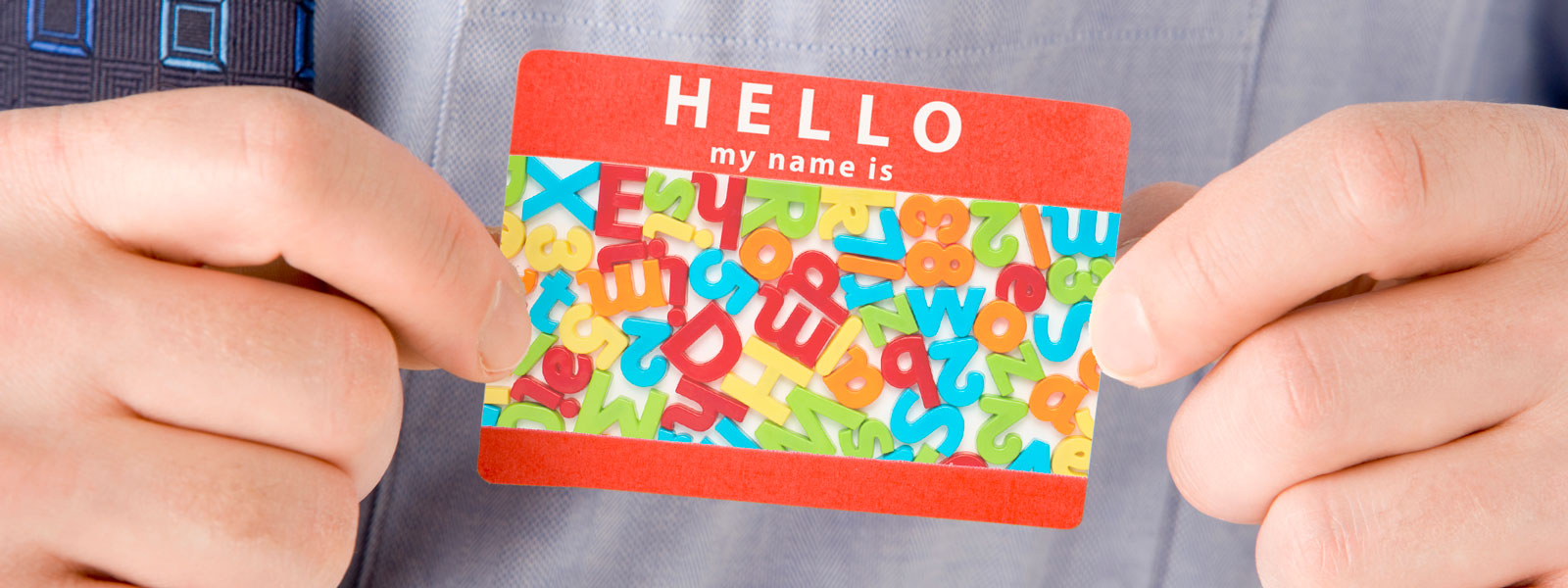
Dale Carnegie once said, “A person’s name is the sweetest sound in any language”. If that is so, it is important we learn people’s names and remember them, even if they are difficult names to spell and pronounce. In my 40 years of leadership training and coaching, I have found that people who put great effort towards remembering names are well respected. Here is an example of how powerful this can be:
Yesterday I went to the hospital to give a blood sample for my rheumatologist. As I was registering, I said, “I am here to give a blood sample. If is for Dr. Geevarghese. (Pronounced “Gee-var-geese”). When I said that, the receptionist and her assistant stopped and stared with their mouths open. Then one of them said, “This is the first time someone has said the doctor’s full name and procounced it correctly. Everyone says “Dr. G”
It is my assumption that Alex Geevarghese is just as proud of his name as someone named John Smith. With that in mind, I make my best effort to remember names. I find that doing so shows respect and helps build trust.
If this sounds trivial, here’s another example for you: A few years ago I was coaching someone who worked with people from the country of Laos. The name of one of his co-workers was extremely long with many syllables. None of this person’s co-workers knew how to pronounce his name. It was too much work. They just called him “Nick”. My client was determined to learn Nick’s name, and he did The next time he saw Nick, he said, “Hello _____ _______” Tears came to the man’s eyes, and he said, “You are the only person here who has taken the time to learn my name. Thank you so much” Lesson learned: We need to make a full effort to learn and use names – even if it is challenging. Take the challenge!

What is charisma?
Charisma. Every boss, professional athlete, politician, or PTA president seems to like that word. We hear people say, “He or she has charisma.” We have also heard someone say, “He or she has no charisma.” OK…so charisma is good…but what is it?
I toiled with this question for many years until one day 20 years ago. I was reading a book by Barbara De Angelis, and she defined charisma as “paying attention”. What a boring definition for such an energy noun! In many ways, she was right:
Several years ago our family was on a cruise ship in the Caribbean. We had two main servers when we dined: Peter and Ozzie. We liked them both. Ozzie was a natural showman, and knew how to perform. Peter was also engaging, but his demeanor was slightly more tempered. Peter ended up being our favorite. Afterwards, we tried to figure out why. Our thoughts kept going back to Peter’s attentiveness. He was the most genuine, and put his focus on others, being in tune to us as individuals. He would sense needs, and respond with help. It seemed his thoughts were so focused on helping others, he did not have time to say, “Look at me!” We did anyway. Peter had true charisma: He was enthusiastic about his work, and he put his focus on serving others. He put these two magic ingredients together. So everyone…pay attention!

Sales professionals help clients make better decisions
Have you ever made a decision and later looked back and regretted it? Most of us have. Why did we make that decision? It was likely because we missed something in the beginning. There was valuable information or input available, and we didn’t know it. Now we know it, but look at all the suffering it took. As sales professionals we can be proud that we help people make better decisions.
I have a friend who is a financial planner. A few months ago he received an unsettling phone call. A long-time client informed Dave that he was changing to another advisor. He got a better deal. Dave was surprised. He had done well for his client, and been in there with him side-by-side all the way. Dave was a good sport and accepted the decision. With gentle persistence he also found out who his client was switching to.
The next day Dave decided to do some research on this person his client was moving to. He found that he had only been in the business two years and had worked for three different firms in that time. That concerned Dave, and he called his departing client. First Dave affirmed the clients decision. He then said, “If you are like me, when you make a decision, you want to get all the relevant information you can. I took a few moments to research the person you are moving your account to. Here is some information I thought you would want to know as you move forward….”
Dave shared this information. His client thanked him. Later that afternoon, the client called, and said he had changed his mind, and wanted to stay with Dave.
The most important point to note is that the intent of Dave’s call was pure. He wasn’t trying to get him to change his mind. He was being a good friend, and sharing information he thought would help his client. Let’s remember Dave’s story and the message: As sales professionals, we help people make better decisions.

Skillful negotiations: Take the high road to more profit
Two years ago I received a call from a client who was in a dilemma. He had just been informed by his company accountant that some equipment he had sold several months ago had not been paid for. The equipment was expensive and the unpaid balance was hefty.
Jack thought about his options: He could go the legal route and take the heavy-handed approach. This would burn the relationship. He didn’t want to do that. The other option was to set up a video conference with himself, his boss, and the two owners that owed them. They set the meeting up.
Next, we talked about preparation for the meeting. The most seasoned negotiators are very aware of these two fundamentals:
- Know your position of strength going into the meeting.
- Clearly define these three different categories:
- The ideal outcome of the meeting
- The acceptable outcome
- The “walk away”
The meeting began on a friendly tone that enabled everyone to relax. Jack’s boss is an excellent listener and he let the owners talk first. He then paraphrased and affirmed what they said, and they nodded in agreement. Throughout the meeting, Jack and his boss were able were able to clearly communicate their negotiables and non-negotiables. The meeting went well, and they were pleased with the plan that was agreed upon.
When I think about this situation I realize there are so many ways this situation could have gone bad with shouting matches and the destruction of a relationship.
We are all in the midst of recovering from the Pandemic. It is likely that you are holding someone’s inventory and have a balance that is overdue. If you value the relationship, consider having a meeting with them to find a common ground. Once again, here are the key fundamentals:
- Know your position of strength (and theirs)
- Define your ideal, acceptable, and walk-away outcomes.
- Begin in a friendly way.
And remember the “4 F’s”
- Firm
- Friendly
- Frank
- Fair