
Categories
Archives
Search
The Five Competencies of a Championship Team
One of the benefits of having my own company is being able to select who I work with. I prefer to work with teams that operate at the championship level. It is more fun, and far more rewarding. But you say, “If they are champions, why do they need me?” If you are a good bowler, golfer, or baseball player, do you ever stop wanting one more pin, a lower handicap, or a higher batting average?” Championship teams operate differently from so-so teams. In addition to focus, extra effort, and character (See link to 2/6/12 blog below), the champions all do the following:
- Working agreement: (See link below) whether formal or informal, winning teams know how they work together best. Everyone is important, and so are their needs. Building a working agreement establishes a frame of reference that keeps each team member with a healthy mindset with maximum focus and minimum distraction.
- Winning mindset: Powerful teams welcome challenge and see setbacks and disappointments as an opportunity to try again more intelligently
- Problem solving skills: Not only to the champs have a good attitude about difficulty, they stick to the problem solving process and see it though without skipping a step. That is why they are so good at focusing on the problem and not the personality.
- Skillful, synergistic communication and coordination: Not only do they have a process for solving problems, they also have the skill that goes with it. Everyone’s input is important, and meetings and discussions produce quality results because they have idea fluency and incorporate collective wisdom.
- They know their roles. It’s one thing to say, “That’s not my job”. It is another to do someone else’s job for them. Champions know their roles, and they count on their teammates to do the same. These winners put heavy demands on themselves and create a “structural tension” that gives them that winning edge.
Putting these all together, I think we can best sum it up with a quote from Hall of Fame Coach Vince Lombardi:
“You’ve got to be smart to be number one in any business. But more importantly, you’ve got to play with your heart, with every fiber of your body. If you’re lucky enough to find a guy with a lot of head and a lot of heart, he’s never going to come off the field second”
http://www.durhamcoach.com/blog/2012/02/08/championship-teams-do-all-three/
http://www.durhamcoach.com/blog/2011/10/19/does-your-team-have-a-working-agreement/
Remembering Steven Covey
Remembering Steven Covey…
Last week brought the sad news of the passing of Steven R. Covey, world-renowned leadership and management expert. In hearing of Covey’s death, thoughts of all his contributions came to mind. His work was transformational for those companies and individuals who took the time to understand and apply his timeless, common-sense principles for joyous and abundant living. I want to share a three of his principles that were especially important to me. Here they are:
Begin with the end in mind. This sounds so simple, doesn’t it? Why wouldn’t we begin with the end in mind? According to the late billionaire, Bunker Hunt, “Most people don’t take the time in life to determine exactly what they want. Success comes in two steps: Knowing exactly what you want, and being willing to pay the price to achieve it.” To illustrate, just imagine trying to put together a 1000-piece jigsaw puzzle without a picture on the box!
Balance your Q2 and Q1 ratio. In his classic book, “The Seven Habits of Highly Effective People”, Covey had a quadrant that included these four categories:
- Important and urgent
- Important, but not urgent
- Urgent, but not important
- Not urgent or important.
It is easy to get caught in the world of “tantalizing trivialities”. There is such a temptation to spend time in the 3rd and 4th categories. We allow ourselves to be distracted by low priority interruptions. We spend too long on our lunch hour and spend production time talking about sports. When I coach teams, many of them are constantly in the “important and urgent” category”. Covey taught us to put a sense of urgency on the important by planning and delegating well, and using and respecting deadlines. If we don’t put a sense of urgency on what is “important but not urgent”, it will eventually become urgent. Example: Having a conversation with your teenager today. It is important, but not urgent. If you keep putting it off, the conversation may become urgent!
Synergistic Communication
Covey says there are three levels of communication.
- Win-lose: No trust is needed in this mode. It is a zero sum game. As a result of our conversation, I win, and you lose.
- Compromise: Some trust is involved here. Each side must be willing to give and take. The result is coming up with a plan that everyone can “live with”
- Synergistic communication: This was Covey’s favorite. At this level the sum is greater than the total of its parts. We have a problem. I have an idea. Instead of disagreeing with me, you look for common ground and say, “I like what you are saying about_______. How about if we added_______” The other person responds, “OK. If we add that, how about if we included this also?” The conversation goes back and forth, and in each exchange, your thinking is at a higher level. When you finally come up with your action plan, it is better than either of the original individual ideas. When we can reach this state of communication and problem solving, great things can happen. I have personally witnessed this.
Thank you, Mr. Covey for these nuggets of wisdom that have helped form my career today. You have left a legacy, and we will miss you.
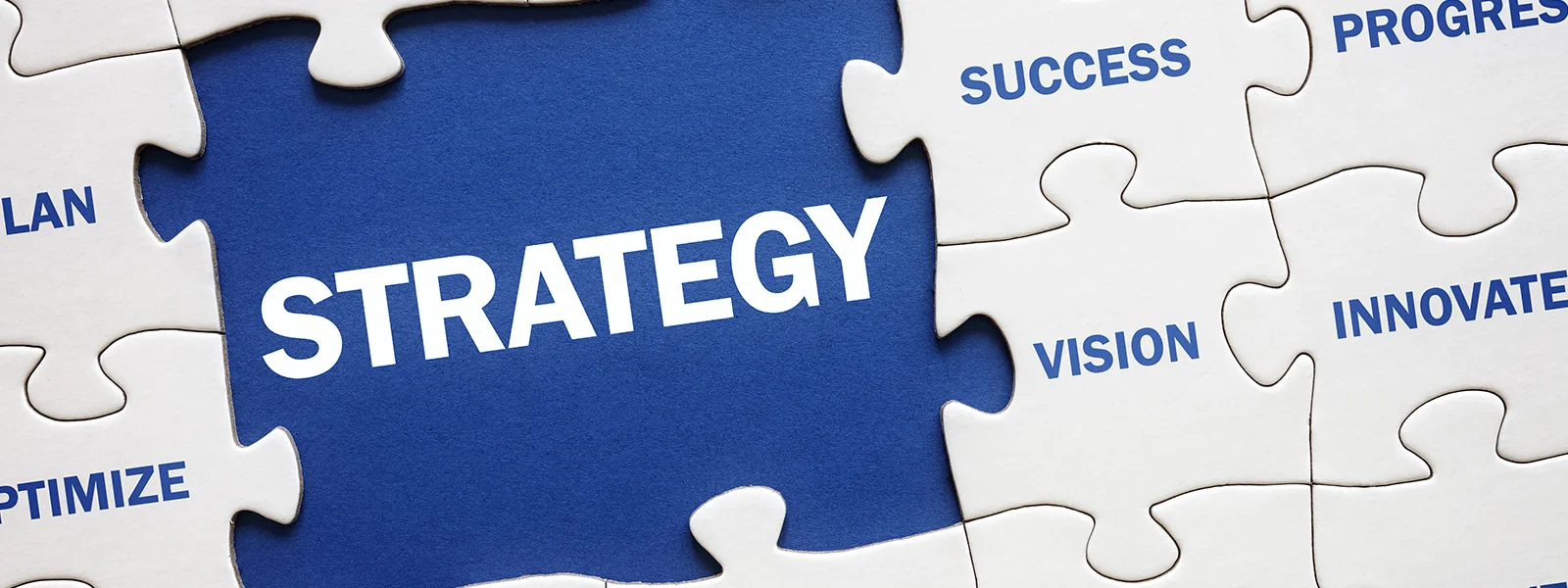
Strategy: The gift that keeps on giving
Strategy: The gift that keeps on giving
OK. You know what you want and you have set specific goals. It is time for the fun to begin. We are now ready to develop our strategy. This is our roadmap to get to our goals. A strategy is our own special recipe for achieving specific goals, and it should be as unique as our fingerprint (and far more exciting!). Like any good recipe, there are important ingredients that need to be blended together in just the right portion.
Strengths: When we look at what we want to achieve, the first thing we do is look at our strengths. Our strengths are the characteristics and qualities that have gotten us to where we are today. What are your strengths? If you need help in answering this question comprehensively, ask a friend or visit helpful websites like strengthfinder.com. Find your strengths. We need to know them and use them.
Activity: Keeping in mind our strengths, we need to look at what mix of tasks and activities we will need to put into play. Here are some points to consider:
- What activities, if done consistently, have stood the test of time in generating desired results? This could be networking, giving programs, participating in golf tournaments, or attending seminars.
- How can you create synergy by matching your strengths with selected tasks and activities? If you are strong in one-on-one situations, you will probably look for several networking activites. If you are good at public speaking, you may seek out organizations, associations, and civic clubs to deliver you valuable message. How about if you have writing and analytical skills? How could they be effectively leveraged?
- What new innovative ideas and activities would you like to initiate?
- How will you plan your year, month, week, day?
Habits: Albert Gray said it over 70 years ago in his essay, “The Common Denominator of Success”: “People form habits…habits form futures” What habits are working for you? What habits are not helping you (see barriers)? What is the single most important habit you need to work on? How soon can you get started on it? How can you ensure you will sustain your momentum? What results do you expect for your efforts?
Putting it all together, your strategy should consist of your ideal blend of strengths, activities, and habits that come together to drive you towards your specific goals. The next step…EXECUTE!

The word “fun” is making a comeback
When I am coaching teams, one of the key components I use is a working agreement. To maximize ownership, a working agreement is built by input from the entire team. Each team member is asked to write down all key characteristics and qualities of a working environment that enables them to be the most productive. One word that has been popping up more frequently is “fun”. In addition to all that good stuff like a sense of belonging, self-fulfillment, and good benefits, they want to have fun!
At first, some seem timid when they suggest “fun” to be on the menu. Possibly they are afraid that they will be perceived as not taking their work seriously. Let’s remember what baseball great Harry Caray once said: “I take my responsibility seriously, but I don’t take myself seriously” Say what you want about Harry Caray…he knew how to have fun.
In his best-selling book, The Happiness Advantage, Harvard Scholar Shawn Achor has concluded that “bosses who discourage fun for their employees are at a double disadvantage, because they tend to be people who are most negative themselves. In short, sacrificing fun in the name of time management and efficiency actually slows us down”
Southwest Airlines is the only major commercial air carrier that has made a profit almost every year they have been in business. Here are their top three priorities in order of importance:
1. Employees are #1
2. Having fun
3. Making the customer happy
If you have ever flown on Southwest Airlines, you probably know what I mean. They are one zany bunch. They even went so far as to do a rap song to deliver the standard safety message required before each takeoff.
Here are some ways we can make work more fun:
- Check your fuel gauge before the day begins. Thoreau referred to the first hour of the day as the “Golden Hour”. He believed that our thoughts and attitude in this time frame were critical to our attitude the remainder of the day. We must do what it takes to get our attitudes on “full”. Do some inspirational reading, listen to some zesty music, or watch a motivational video.
- Plan your day well. Dr. Hans Seyle said, “A successful life is a series of successful days”. If we want to feel fulfilled at the end of the day, we need to plan it well. We all know what happens when we don’t plan our day well: We end up caught in the trap of hurry and indecision.
- Make a game out of it: If we have tasks to do, we can set a goal and see if we can beat it. Occasionally, when I have some tedious work to do, I will use my stop watch on my cell phone, and track my time per item. Of course, the goal is to keep improving on the time without compromising the quality of my work.
- Have your favorite video and audio clips available when you need a pick-me-up. I have mine. One of them is a famous Three Stooges clip. Another is the MAD TV Bob Newhart clip called “Stop it”. It is always good for laughs, and helps get me back on track when I get in to a funk.
- Take breaks: A walk around the block or a breath of fresh air can reduce stress and spark creativity.
- Play a game with co-workers. This can be anything from dollar-bill poker to video basketball. It is a complete diversion, and it is fun.
If none of these appeal to you, just Google, “Ways to have more fun at work”, and you will find scores of additional ideas. I close with a quote from Dr. Wayne Dyer: “There is no way to happiness…happiness is the way.”

The price objection….welcome it!
The price objection….welcome it!
A couple weeks ago, I was having a conversation with an entrepreneur business client. She had checked around with her competition, and was considering lowering her prices to be more competitive. We talked about her situation and took a “deeper dive” in to this dilemma. After doing so, she came to the firm conclusion that lowering her price was not the solution to the problem. Instead, she decided to focus on selling the added value she had to offer.
A Chevy is cheaper than a Cadillac, and they sell a lot more Chevy’s than Cadillac’s. Cadillac has an added value that people are willing to pay for. How do we sell added value? Let’s break it down:
- Determine exactly what the prospects want and why they want it. (http://www.durhamcoach.com/blog/2012/06/06/selling-vs-telling-the-critical-factor/)
- Know about how your product is unique and be able to communicate this distinction. Break down your knowledge into facts, features, and how they relate to the needs expressed by the buyer.
- Be able to create a word picture that can take the prospect forward.
To illustrate, let’s use an example: Here is the situation:
You are at the point where you are looking to close the sale. The prospect says they are going to shop around:
Me.: “That makes sense. In fact, I like to make sure I shop around myself when considering an important purchase. As you do your shopping, here are some key features you can keep in mind as you are preparing.
- This event will be an exclusive. You people will enjoy personalized treatment
- We have twice the average number of servers. You mentioned how important that your guests were responded to promptly
- Each server receives 6 months training in our special customer service program. That means you can count on us serving your needs with excellence and professionalism.
(Word picture)
Cheryl, as I understand your situation, you want your wedding to be fun and memorable, and you would like your guests to reflect positively on the whole experience for many years to come. Is that correct? Let’s imagine it is your wedding day. Here you are walking in with your new husband. As you enter….
From this point, we would project a picture that was clear, vivid, and unforgettable. Here are the fundamentals:
- Details
- Present tense
- Positive
One of my friends describes this part of the sales process as “play the movie”. We all like good movies, and when a sales professional is able to put us in a nice picture, they touch off our positive emotions, and make us want to move forward. This process creates added value, and can be very powerful.
Summarizing, the next time you are tempted to lower your price, make sure you have made time to take stock of your qualities.