
Categories
Archives
Search
Category: Customer service

Greatest referrals source: “Wowed customers”
When it comes to service, you can deliver expectations, exceed expectations, or if you are up for it, amaze your customers. One of the most fruitful ways to generate quality referrals right and left is to leave our customers with jaw-dropping service and gestures.
Here is a personal example: Six weeks ago I became a grandfather for the first time. My financial planner knew about the new addition, and acknowledged it. But he didn’t stop there: He gave us a gift. It was a custom-made book dedicated to my grandson. Page one started with Levi’s picture, and the proceeding pages colorfully acted out each letter of his name with animals. (e.g., Leopard, elephant, viper, inch-worm). Last night my wife read a book to Levi for the first time and it was that book. 6-week old Levi was totally engrossed and fascinated by the book as Grandma dynamically read each page. It was a hit! How did our financial advisor (Jim) get a picture of our grandchild to make that book? It was easy. He got it from a text I sent on my I-Phone. Grandparents love to brag to everyone!
After the book-reading experience, I reflected on what an excellent gift that book was. The gift demonstrated to us that Jim cares for us and is eager to give us extra effort. I can’t wait to give Jim another referral. As it turns out, Jim has reached a point where he doesn’t need to prospect. He doesn’t have time. He is too busy following up on quality referrals. When was the last time you amazed a customer?

The secret good motivators know…
“Change of heart can’t be imposed…It can only be chosen”
–Dr. William Miller
Have you ever found yourself giving the same lecture over and over to your kids, relatives, or people who report to you? We can preach, threaten, or even penalize, but what can we do to inspire a change of heart?
A few months ago I called my stove repairman to fix a minor problem. I reached his voicemail, and in the message he mentioned that they would not enter my house unless I was wearing a mask. What nerve, I thought! He is telling me what to do in my own house. I abruptly deleted the contact from my file.
Fast forward to last month: I needed my carpets to be cleaned for the holidays, and I set up an appointment. The personnel were friendly, responsive, and right on time. The enthusiastic service tech came to the front door, and when I greeted him, I was wearing a mask in my own house! Why? Because I had a choice, and I chose to wear it. I thought about the service tech and wondered if he had a family. What if his wife was pregnant? I found myself empathizing rather than just thinking about my position. The tech did a fine job, and even threw in an extra room for free. Now that’s a win-win.
This experience reminded me of an important quality that loved and respected leaders have: The ability to listen, ask questions, and let others choose whenever possible. Even though there are times we must follow other’s directives without much choice, when we can offer someone a choice and let it be their decision, we can inspire that change of heart.
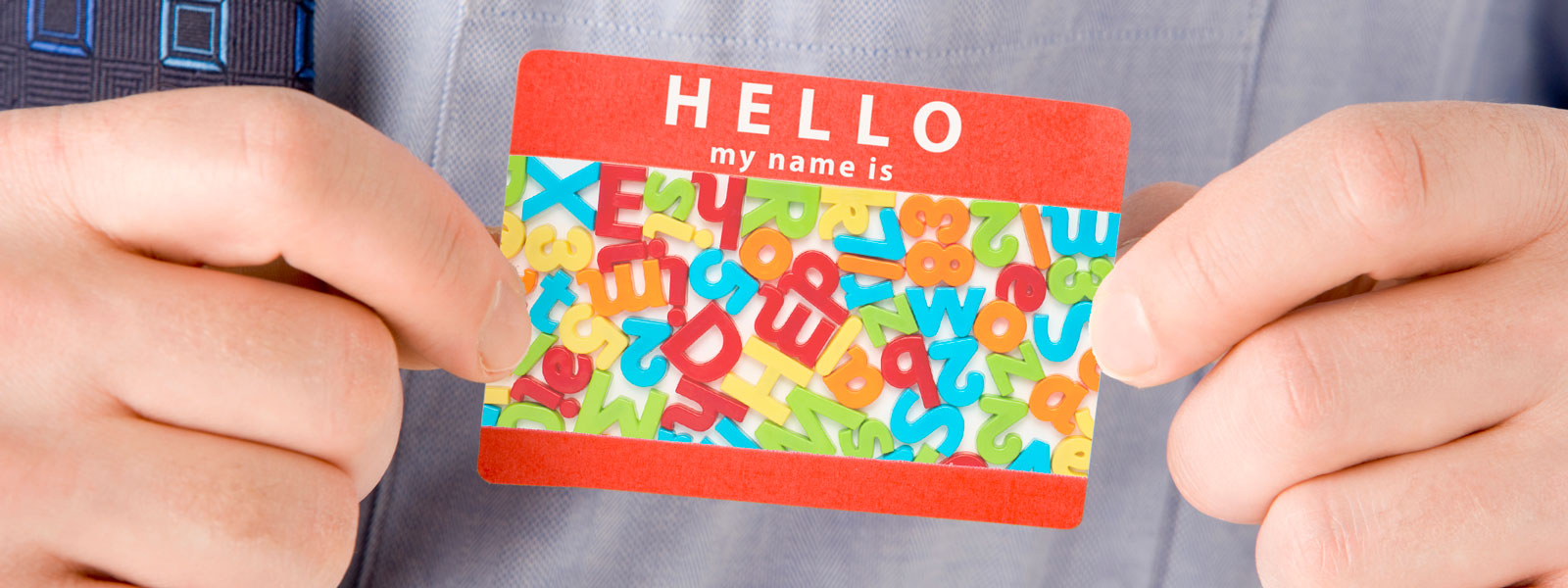
The power of learning and remembering tough names
Who is Coach “K”? If you said “Duke University basketball coach”, you are correct. For extra credit, what does the “K” stand for? Answer: Krzyzewski (pronounced “sha-chef-ski”)
Dale Carnegie once said, “A person’s name is the sweetest sound in any language”. If that is so, it is important we learn people’s names and remember them, even if they are difficult names to spell and pronounce. In my 40 years of leadership training and coaching, I have found that people who put great effort towards remembering names are well respected. Here is an example of how powerful this can be:
Yesterday I went to the hospital to give a blood sample for my rheumatologist. As I was registering, I said, “I am here to give a blood sample. If is for Dr. Geevarghese. (Pronounced “Gee-var-geese”). When I said that, the receptionist and her assistant stopped and stared with their mouths open. Then one of them said, “This is the first time someone has said the doctor’s full name and procounced it correctly. Everyone says “Dr. G”
It is my assumption that Alex Geevarghese is just as proud of his name as someone named John Smith. With that in mind, I make my best effort to remember names. I find that doing so shows respect and helps build trust.
If this sounds trivial, here’s another example for you: A few years ago I was coaching someone who worked with people from the country of Laos. The name of one of his co-workers was extremely long with many syllables. None of this person’s co-workers knew how to pronounce his name. It was too much work. They just called him “Nick”. My client was determined to learn Nick’s name, and he did The next time he saw Nick, he said, “Hello _____ _______” Tears came to the man’s eyes, and he said, “You are the only person here who has taken the time to learn my name. Thank you so much” Lesson learned: We need to make a full effort to learn and use names – even if it is challenging. Take the challenge!

What is charisma?
Charisma. Every boss, professional athlete, politician, or PTA president seems to like that word. We hear people say, “He or she has charisma.” We have also heard someone say, “He or she has no charisma.” OK…so charisma is good…but what is it?
I toiled with this question for many years until one day 20 years ago. I was reading a book by Barbara De Angelis, and she defined charisma as “paying attention”. What a boring definition for such an energy noun! In many ways, she was right:
Several years ago our family was on a cruise ship in the Caribbean. We had two main servers when we dined: Peter and Ozzie. We liked them both. Ozzie was a natural showman, and knew how to perform. Peter was also engaging, but his demeanor was slightly more tempered. Peter ended up being our favorite. Afterwards, we tried to figure out why. Our thoughts kept going back to Peter’s attentiveness. He was the most genuine, and put his focus on others, being in tune to us as individuals. He would sense needs, and respond with help. It seemed his thoughts were so focused on helping others, he did not have time to say, “Look at me!” We did anyway. Peter had true charisma: He was enthusiastic about his work, and he put his focus on serving others. He put these two magic ingredients together. So everyone…pay attention!
Building trust can improve time management
There are many rules on good time management. Block time, prioritize, plan, have a vision, etc. These are all important. I would like to put the spotlight on one time management tool that is often overlooked: Building trust. When we build trust, our customers, employees, and associates see us as a friend, consultant, and teacher. This means we often spend for less time selling them our ideas. They are quick to jump on board. They trust us. Consider the consequences when we have not built trust:
Once I was working with a client who owned a successful service business. One day he shared with me a confrontation he had had with a customer. This owner – we’ll call him Roger, was trying to work through a concern that a particular customer was having. At one point, the customer said, “Oh you are just saying that. All you care about is making a buck”. That wasn’t true. Roger was a caring person of good character. Nonetheless, what the customer said concerned him. Roger said, “From what you just said, I sense that you do not have full trust in me and the work that I am performing. That is OK. It is my responsibility to build that trust. My advice to you is to find someone you trust. You need to be confident in the person who is doing your work.” As soon as Roger said this, the customer backed down, and said she was just having a bad day. She actually apologized. She was open now, and they could have a good problem-solving discussion. Roger knew that he needed to have trust to get others to listen, and listening saves time!