
Categories
Archives
Search

The most profitable prospect
If you are in sales, you know the most important thing you need to do: Have as many sales conversations as you can with qualified prospects. So how do we qualify prospects and which prospects should we be seeing the most? Consider these four types of prospects:
- Known need and willing to talk
- Known need but not willing to talk
- Unknown need
- No need but willing to talk!
Prospect #1 sounds ideal, but we need to be careful. They may tend to price shop. Prospect #2 is good. We just need to build trust and get them comfortable talking. Then there is prospect #3: This one is my favorite: An unknown need. Here is an example to illustrate:
Several years ago, I was doing some assistant coaching for soccer, and I was talking to the head coach. In our conversation, we both talked about who we worked for. As it turned out, I discovered Sam was the President of a large manufacturing firm that employed over 500 people. When I talked about what I did, he said, “I’d like to meet with you at my office”. We did. As a result, I did a needs assessment, and when we were complete, we uncovered a serious problem he did not know he had. I had help him discover it! He was concerned, and asked, “Now that we know, how can you help us?” We worked together, and he soon became my biggest customer. When we helped him discover a serious problem he wasn’t aware of he turned to me for the solution. Seems natural, doesn’t it? Now you know why I like prospect #3. Oh yes, how about prospect#4? He or she is all yours!
The power of learning and remembering tough names
Who is Coach “K”? If you said “Duke University basketball coach”, you are correct. For extra credit, what does the “K” stand for? Answer: Krzyzewski (pronounced “sha-chef-ski”)
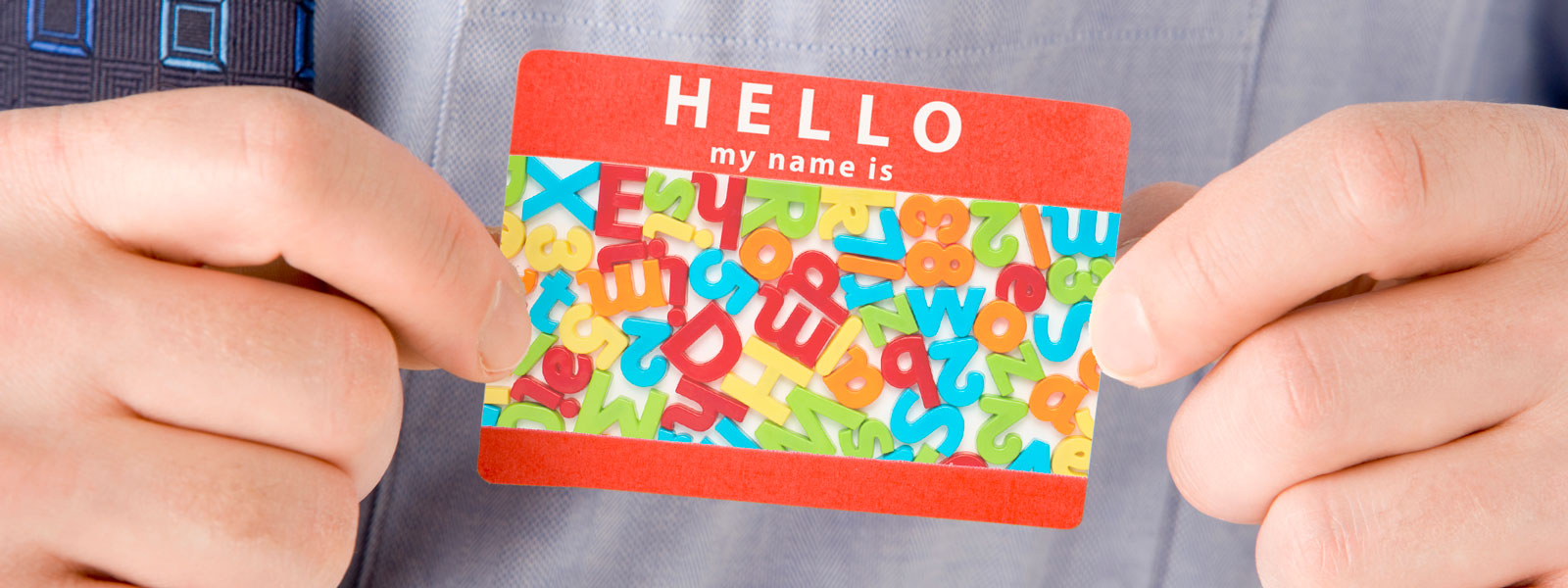
Dale Carnegie once said, “A person’s name is the sweetest sound in any language”. If that is so, it is important we learn people’s names and remember them, even if they are difficult names to spell and pronounce. In my 40 years of leadership training and coaching, I have found that people who put great effort towards remembering names are well respected. Here is an example of how powerful this can be:
Yesterday I went to the hospital to give a blood sample for my rheumatologist. As I was registering, I said, “I am here to give a blood sample. If is for Dr. Geevarghese. (Pronounced “Gee-var-geese”). When I said that, the receptionist and her assistant stopped and stared with their mouths open. Then one of them said, “This is the first time someone has said the doctor’s full name and procounced it correctly. Everyone says “Dr. G”
It is my assumption that Alex Geevarghese is just as proud of his name as someone named John Smith. With that in mind, I make my best effort to remember names. I find that doing so shows respect and helps build trust.
If this sounds trivial, here’s another example for you: A few years ago I was coaching someone who worked with people from the country of Laos. The name of one of his co-workers was extremely long with many syllables. None of this person’s co-workers knew how to pronounce his name. It was too much work. They just called him “Nick”. My client was determined to learn Nick’s name, and he did The next time he saw Nick, he said, “Hello _____ _______” Tears came to the man’s eyes, and he said, “You are the only person here who has taken the time to learn my name. Thank you so much” Lesson learned: We need to make a full effort to learn and use names – even if it is challenging. Take the challenge!

What is charisma?
Charisma. Every boss, professional athlete, politician, or PTA president seems to like that word. We hear people say, “He or she has charisma.” We have also heard someone say, “He or she has no charisma.” OK…so charisma is good…but what is it?
I toiled with this question for many years until one day 20 years ago. I was reading a book by Barbara De Angelis, and she defined charisma as “paying attention”. What a boring definition for such an energy noun! In many ways, she was right:
Several years ago our family was on a cruise ship in the Caribbean. We had two main servers when we dined: Peter and Ozzie. We liked them both. Ozzie was a natural showman, and knew how to perform. Peter was also engaging, but his demeanor was slightly more tempered. Peter ended up being our favorite. Afterwards, we tried to figure out why. Our thoughts kept going back to Peter’s attentiveness. He was the most genuine, and put his focus on others, being in tune to us as individuals. He would sense needs, and respond with help. It seemed his thoughts were so focused on helping others, he did not have time to say, “Look at me!” We did anyway. Peter had true charisma: He was enthusiastic about his work, and he put his focus on serving others. He put these two magic ingredients together. So everyone…pay attention!

The value of a healthy sense of humor
“A sense of humor is needed armor”
-Hugh Sidey
Let’s talk about the value of having a healthy sense of humor:
Two days ago I was in a meeting with a church group I belong to. We have all known each other for years. We were reviewing a book we had been assigned to read. During our discussion, the virtue of “counting daily blessings” was brought up. That reminded me of a story, and I shared it with the group:
On New Year’s Eve of 2018, my wife presented me with a calendar she had been writing in all year. Each day, without fail, she would write something special about me. She noted nice things I said and did. I loved reading it, and it was one of those “feel good” gifts. Then, I began reflecting on what I had read. I said to Joyce, “You know something…if I had known you were doing this, I could have done a lot better. I’ll bet some days were better than others”. Joyce replied, “Yes, there were a few that were a stretch!”
After telling this story, the whole group roared in laughter. Then everyone else told their crazy story about their experience of human comedy. We all were overcome with laughter, and before we knew it, we had gone one hour over our usual meeting time. As we were wrapping things up, one veteran member of the group said, “This meeting has been so much fun, The laughter has soothed my soul. The world seems tense right now, and I think they could use a little of this”
I agree. We need more humor – not less. I am talking about healthy humor – the kind where we can laugh at ourselves or life in general with no personal insult to anyone. It feels good. Pour me another cup.
Building trust can improve time management
There are many rules on good time management. Block time, prioritize, plan, have a vision, etc. These are all important. I would like to put the spotlight on one time management tool that is often overlooked: Building trust. When we build trust, our customers, employees, and associates see us as a friend, consultant, and teacher. This means we often spend for less time selling them our ideas. They are quick to jump on board. They trust us. Consider the consequences when we have not built trust:
Once I was working with a client who owned a successful service business. One day he shared with me a confrontation he had had with a customer. This owner – we’ll call him Roger, was trying to work through a concern that a particular customer was having. At one point, the customer said, “Oh you are just saying that. All you care about is making a buck”. That wasn’t true. Roger was a caring person of good character. Nonetheless, what the customer said concerned him. Roger said, “From what you just said, I sense that you do not have full trust in me and the work that I am performing. That is OK. It is my responsibility to build that trust. My advice to you is to find someone you trust. You need to be confident in the person who is doing your work.” As soon as Roger said this, the customer backed down, and said she was just having a bad day. She actually apologized. She was open now, and they could have a good problem-solving discussion. Roger knew that he needed to have trust to get others to listen, and listening saves time!