
Categories
Archives
Search
Category: Leadership
Accountability is keeping our word
What happens when we “bite off more than we can chew”? We have to face the music.
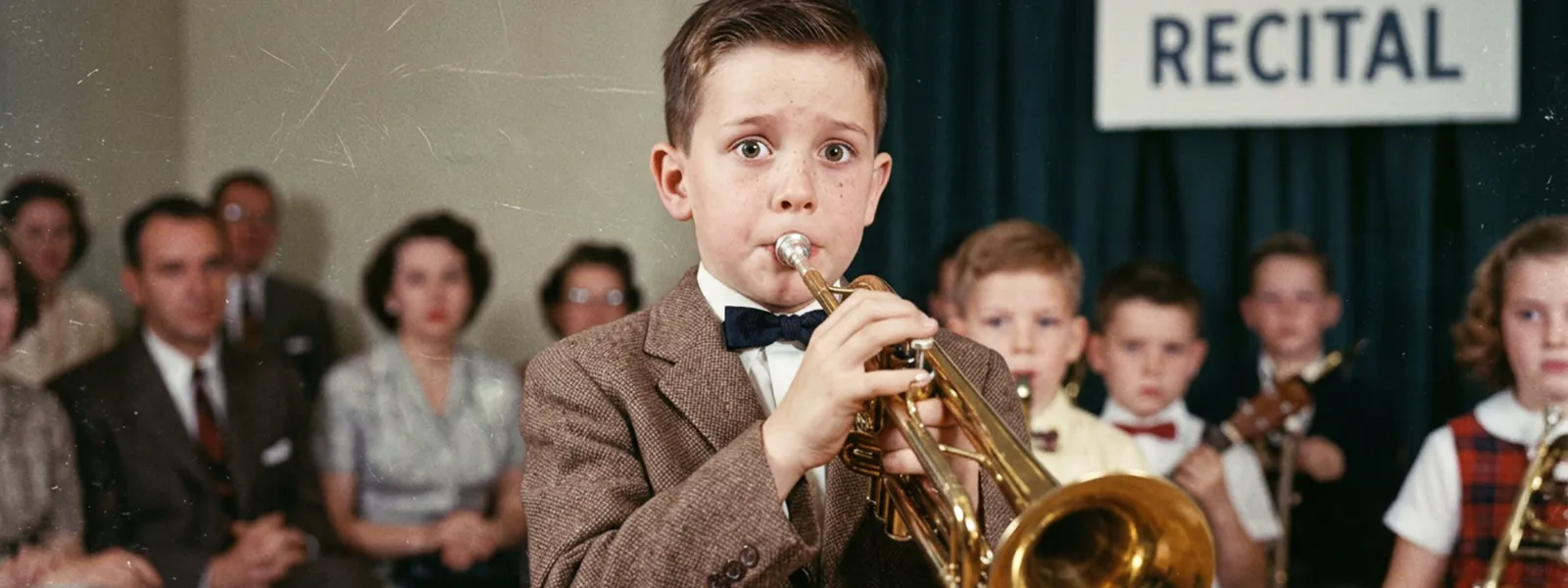
When I was in 5th grade, I played the trumpet. The band teacher had planned a recital to be performed in front of the whole school. I was asked to play a specific piece, and I accepted the assignment. I did so with little knowledge of the song. That was a mistake.
As I began practicing the piece, it quickly became clear that the song was very hard and beyond my skill level. I kept trying and things seemed to be getting worse. Not wanting to make a fool of myself in front of the whole school audience, I decided to back out. Before I bailed I told my mom. She didn’t cut me any slack, and said, “Stephen, you gave that man your word and you must keep your word.” I replied, “But mom, I’ll make a fool of myself.” Mom responded, “Well I guess you”ll just have to make a fool of yourself. If you commit to something, you must follow through.”
The day of the dreaded event came, and I still couldn’t play the piece. With no alternative, I got my mind in the right place, and began by handing the accompanist her part. I let mind my mind float into another zone. I played the song beautifully and to perfection. I could’t believe what was coming out of that horn.
Thanks to Mom for challenging me to be a person on my word. When we do what we say we will do, we gain confidence and earn respect. A leader guides someone to a place they would not go on their own.

Use the power of the written word
It was in the early 1990’s, and I was reading an article about James Michener, the most popular historic fiction writer of that time. The article showed a picture of Mr. Michener seated at his desk in front of an ancient Underwood typewriter doing his work. Word processors were widely available by that time, and most of his books were over a 1000 pages. In spite of that, he chose to use his old manual typewriter to write. Hmmm…
A few months later I stopped by a typewriter repair shop to pick up a couple new ribbons. As I was making the purchase, I asked the store owner why James Michener used a manual typewriter. His answer came quick and was very simple. “Feeling”. Novelists like to put a lot of feeling into their writing, and working on a word processor can blunt that effort. This answer intrigued me, and heightened my respect for the power of the written word.
So what does the “power of the pen” mean to us? One benefit is stronger business relationships, which means we improve our ability to create and keep customers. For 20 years I was a leadership training facilitator. I would often write a note on a 3×5 card in the spur of the moment to class members. It was quite common that years later I would encounter an alum from my class who carried one of those 3×5 cards I had written to them.
The Declaration of Independence shows us that when you put a pen to a blank sheet of paper, great things can occur. Go ahead. Try it. Go to a quiet place, put on your “thinking cap”, grab a pen and sheet of paper, and let your mind flow. It could be an idea or simple note of encouragement or appreciation. Make a bigger impact!

The most important part of a vision
We’ve heard the expression, “I’m living a dream”. Having an exciting vision and making it happen can keep our spirit alive. One characteristic I have always found in a great vision: The fulfillment of a great vision leaves the world a better place.
In 1949 (the year I was born), Gerry Lerner invented “Mr. Potato Head”. Before you could play with Mr. Potato head, you needed to buy a real potato. It was a popular toy, and the kids liked it. Parents didn’t like it as much. You see, playing with real potatoes is a mess!
In 1964, someone came up with the idea of making the torso of Mr. Potato Head out of plastic instead of a real potato. Hygiene and child safety were key issues. The change to plastic was a success, and sales increased dramatically.
Fast forward to two weeks ago. My wife and I were playing with our grandchildren (ages 1-5). The activity was each person designing their own Mr. Potato Head. The kids imagination went wild. We role played. We laughed. It was silly fun and we were so connected with the little ones. Playing with Mr. Potato Head is our favorite activity with the grandchildren. 77 years ago Gerry Lerner had a vision. 62 years ago someone improved on his vision. Today, Mr. Potato Head lives on, and without a mess to clean up!
Whatever your vision or purpose, think in terms of what you will leave behind. Knowing and believing in our legacy can give us more energy, enthusiasm, and desire to stick with it. We can live with a daily sense of purpose and make a difference!

Get the strongest start to the new year
Jim Rohn was an entrepreneur, author, and motivational speaker who became a world-wide expert on personal development. He started as a high-school dropout. In his early 20’s he hired a mentor, Earl Shoaff. One of the first questions Mr.Shoaff asked him was how many books he read a year. The truth was, he read very little. “That’s not a good answer!”, Shoaff said. From that point on, Jim Rohn decided that he would be an avid reader. His mentor knew the truth: High achiever’s read a lot!
Over and over again I find this to be true. Think of the most successful people you know in this business world: Most likely they read whenever they get the chance. When they are driving, they are listening to books or some other form of audio education.
I was reminded of this truth just this week. A client of mine reads constantly. While reading in a spare half hour while waiting for his car to be serviced, he re-acquainted himself with an important management practice that he was falling short on. After further thought, he realized that his management practice of holding a 15-minute team meeting each morning needed to be revived. He remembered that his team was most productive during the COVID outbreak. This daily habit was a critical factor. He began this week with absolute confidence that bringing these meetings back will help lead them back to peak performance.
Bob is an avid reader and he knows the payoff of keeping up with his reading. Are you keeping up with your reading? Are you reading enough? With the New Year about to be started, what is your reading commitment?

The secret to maximum employee engagement
It may not surprise you to hear that an estimated 60% of workers do not enjoy their job. When I think of that, it makes me sad. It also reminds me that we are all unique individuals right down to every cell in our bodies. It is quite likely that every day there is an opportunity to use one of our gifts. The problem is sometimes we can get lazy and we say, “I don’t see my name on it.”
Many decades ago, Brian Tracy, professional trainer and author, identified these criteria to help us uncover and cultivate our special talents. Here are his key points:
8 Ways for you to identify and determine your special talent and what you are uniquely suited to do:
- You will always be the best at something that you love to do. If you could afford it, you would do it without pay. It brings out the very best in you, and you get a tremendous amount of satisfaction and enjoyment when you are engaged in that particular work.
- You do it well. You seem to have a natural ability to perform in that area.
- This talent has been responsible for most of your success and happiness in life up to now. From an early age, it is something you enjoyed to do and you got the greatest rewards and compliments from other people.
- It is something that was easy for you to learn, and easy to do. In fact, it was so easy to do, you forgot when and how you learned it. You just found yourself doing it easy and well one day.
- It holds your attention. It absorbs you and fascinates you. You like to read about it, talk about it, and learn about it. It seems to attract you like a moth to a flame.
- You love to learn about it, and become better at it all your life. You have a deep inner desire to really excel in this particular area.
- When you do what you are ideally suited to do, time stands still. You can often work in your area of special talent for long periods without eating or sleeping hour after hour because you get so involved in it.
- You really admire and respect other people who are good at what you are most suited to do. You want to be like them and be around them, and emulate them in every way.
If you can take time to answer these questions, this should lead you to the things you do naturally well, and enjoy doing. Find a way to weave your strengths into your work. Then go through the same exercise with those who report to you.